

Weeknotes Monday 06 Apr - Sunday 12 Apr 2026
Continuing last week’s theme, I’m still reflecting on my personal and professional life.
I remember talking to my dad (before he died in 2002). He described the world of work he came from: starting on the factory floor in Manchester’s textile industry. Day in, day out, people did the same tasks and became highly skilled in their craft.
The machines and tools they used rarely changed, if at all. The skills were hard won, but once learned they lasted for most of a working life.
By contrast, I think about the amount of change I’ve had to absorb as a digital designer. Part of me envies that stability. (There’s a breakdown at the end of this post of some of what’s changed over the years.)
Week in work
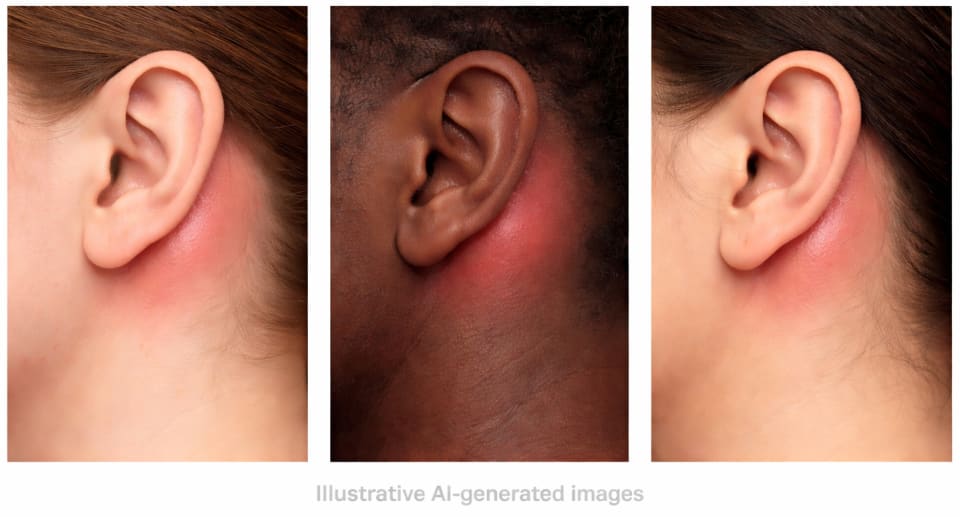
I spoke with our lead clinicians about using generative AI images of medical conditions. We’re trying to understand the legal, ethical and clinical implications. We’ve struggled to find useful images, in this case mastoiditis across different ages and skin types.
We had another all-hands meeting with an update on the abolition of NHS England. It was confirmed that my directorate will not move into an arm’s-length body, so it looks like a return to the civil service.
We made good progress on the AI-assisted navigation prototype. I set direction, then left implementation and iteration to an interaction designer I’m mentoring. I still find it uncomfortable watching people use Figma. It often feels slower and more cumbersome than it promises.
I joined the AI Ambassador Network call. It’s a forum for healthcare professionals to share practical uses of AI. The discussion was clinically focused but showed how quickly people are trying to understand and apply these tools.
I was prompted repeatedly by Copilot to enable new features and automation. More dialogue boxes to dismiss. Alongside the usual requests to rate Outlook or Teams, it adds up.
Week in life
- We had good news about a family member who, fingers crossed, is responding well to cancer treatment.
- We met with Sophie’s teachers to review her first two terms in secondary school. She’s making strong progress, and we agreed to keep her EHCP as it is.
- The short Easter week freed up some time to prepare for summer: lawn cut, leaves cleared, bird feeders topped up.
- This week’s coffee was Resolute from Origin Coffee. It took some effort to dial in but was worth it.
- We set up the hot tub in the garden ready for better weather. I can recommend this pop-up gazebo. It was up in two minutes with minimal effort.
Three decades of digital evolution and progress
1997–2001
- Static to early dynamic web: CGI scripts and early PHP/ASP introduce server-driven content
- Table-based layouts dominate: heavy use of HTML tables and spacer GIFs
- Browser fragmentation: inconsistent rendering across Internet Explorer and Netscape Navigator
2002–2006
- CSS adoption and web standards: separation of structure and presentation gains traction via W3C
- Rise of JavaScript and AJAX: more interaction without full page reloads
- Early UX formalisation: usability and information architecture become established disciplines
2007–2011
- Mobile shift begins: launch of the iPhone reshapes interaction design
- Responsive design emerges: Ethan Marcotte’s approach addresses multiple screen sizes
- JavaScript libraries become mainstream: jQuery simplifies DOM manipulation
2012–2016
- Framework-driven frontends: Angular and React push component-based architectures
- Design tools shift: movement from Photoshop to tools like Sketch
- Mobile-first becomes standard practice
2017–2021
- Design systems at scale: approaches like Material Design standardise UI
- Cloud and DevOps maturity: platforms like AWS support continuous delivery
- Collaborative design tools: real-time work in Figma reshapes workflows
2022–2026
- AI-assisted design and development: generative tools influence ideation and production
- Privacy and regulation: GDPR-style expectations shape UX and data handling
- Shift to services: focus moves from screens to end-to-end journeys across channels